A complete car emergency kit can look expensive, but you do not have to buy everything at once. Building it in stages spreads the cost and makes sure the most important items are in the car first.
Stage 1: The essentials
These items help in almost every roadside situation, from a flat tire to a dead battery at night.
- A phone charging cable for your car's USB port or 12-volt socket.
- A flashlight, ideally an LED model, with spare batteries.
- Reflective warning triangles to warn other drivers.
- A basic first-aid kit.
- Water and a few snacks.
Stage 2: Get yourself moving
- Jumper cables, the cheapest way to deal with a flat battery, or a portable jump starter if you often drive alone.
- A tire pressure gauge. Under-inflated tires wear faster and waste fuel.
- A portable tire inflator that plugs into the 12-volt socket.
- Work gloves and a multi-tool.
Stage 3: Comfort and longer waits
- A warm blanket or emergency foil blankets
- A rain poncho
- An ice scraper and small shovel in winter
- A charged power bank
- A paper map of your area
Ways to save
- Check what you already own. Spare flashlights, blankets and old phone cables can go straight into the kit.
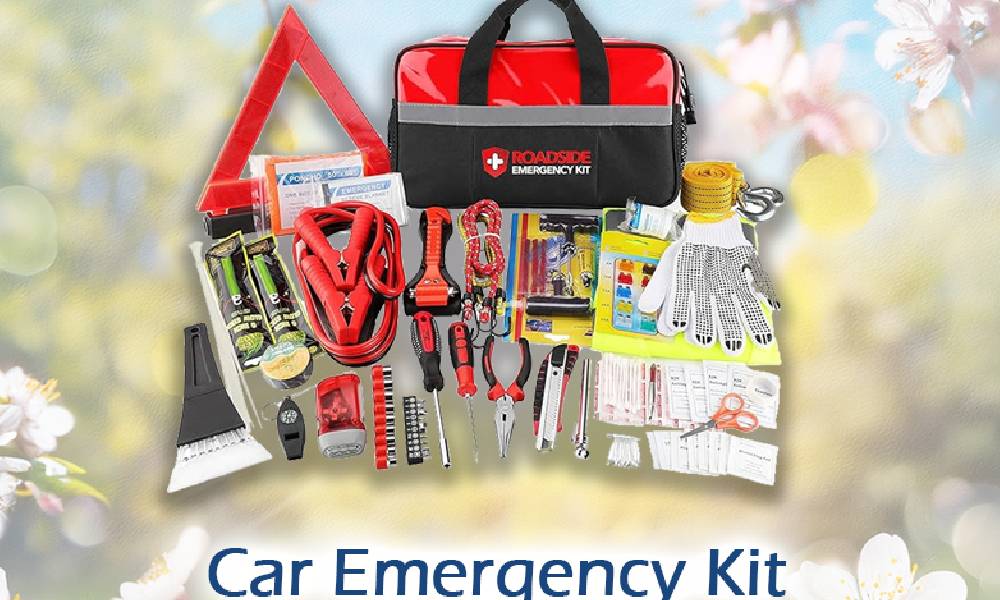
- Consider a ready-made kit. Pre-assembled roadside kits often cost less than buying each item separately, and come in a tidy bag.
- Buy quality where it matters. Jumper cables and inflators are worth spending a little more on; cheap ones can fail when you need them.
Keep it ready
Store the kit in a bag or bin in the trunk and check it twice a year, when the clocks change is an easy reminder. Replace water and snacks, test the flashlight and recharge any batteries.